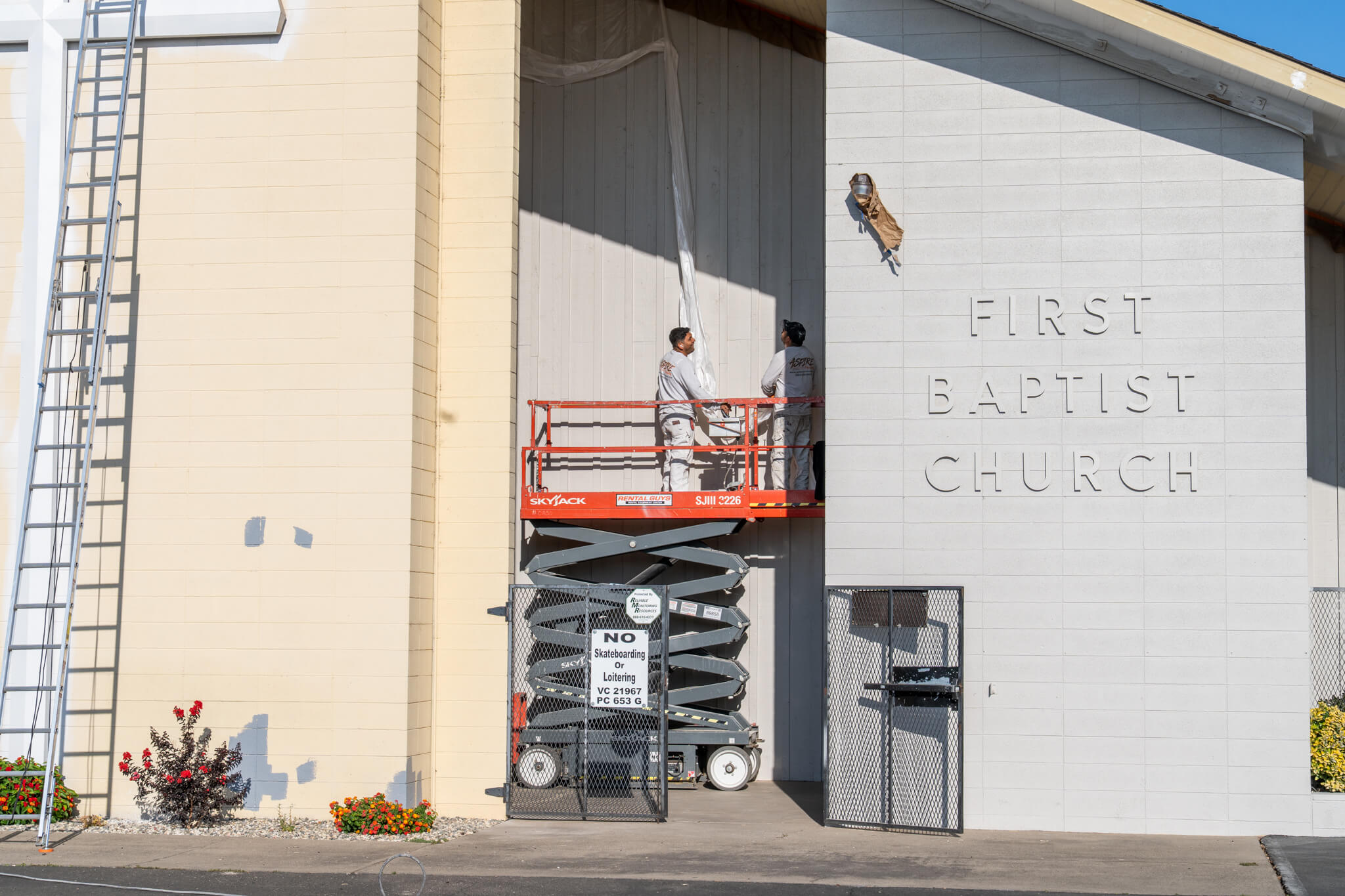
Commercial painting safety is more than compliance—it’s the foundation for protecting workers, clients, and your reputation. A strong safety program reduces accidents, improves efficiency, and builds trust with property owners and project stakeholders. This guide covers OSHA standards, PPE requirements, and risk mitigation strategies every painting contractor should follow.
Why Safety Matters in Commercial Painting
- Prevents injuries and costly delays.
- Enhances client confidence and project quality.
- Supports OSHA and EPA compliance, reducing liability.
- Improves insurance underwriting outcomes and bid competitiveness.
Core Safety Framework: Plan → Equip → Execute
- Plan: Pre-Job Risk Assessment
- Survey the site for fall hazards, electrical risks, ventilation needs, and lead-based paint.
- Prepare work plans and permits for scaffolds, ladders, and hot-work activities.
- Establish emergency procedures, including muster points and first-aid access.
- Equip: PPE and Engineering Controls
- Respiratory Protection: Written program, fit testing, and cartridge selection.
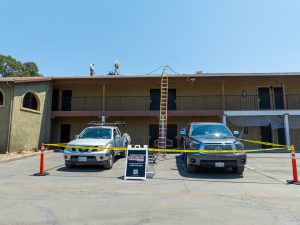
- Fall Protection: Guardrails, harnesses, and ladder/scaffold inspections.
- Ventilation: Local exhaust or negative air systems for fume control.
- Hazard Communication: SDS access and proper labeling.
- Lead-Safe Practices: EPA RRP compliance for pre-1978 surfaces.
- Execute: Training and Supervision
- Provide OSHA-compliant training on fall prevention, respirator use, and chemical handling.
- Hold daily safety huddles to reinforce hazard awareness.
- Perform field audits and document corrective actions promptly.
OSHA Compliance Essentials
- Fall Protection: Required at heights of 6 feet or more.
- Ladders: Inspect before use; maintain proper angle and secure placement.
- Scaffolds: Competent person oversight required for erection and inspection.
- Respiratory Protection: Annual fit testing and cartridge change schedules.
- Hazard Communication: Accessible SDS and clear labeling.
- Lead Safety: Certification and containment for pre-1978 projects.
Personal Protective Equipment (PPE)
- Respirators: Select based on exposure; maintain fit and cartridge schedules.
- Eye Protection: ANSI-rated goggles or face shields.
- Gloves: Chemical-resistant gloves for mixing and application.
- Coveralls: Low-lint options for occupied spaces.
- Hearing Protection: Earplugs or muffs for noisy equipment.
Risk Mitigation in Occupied Facilities
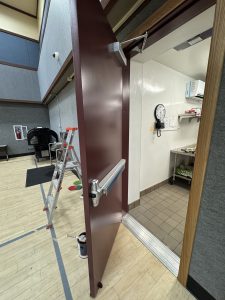
- Post signage and barriers; maintain clear exits.
- Use low-VOC products and schedule high-fume tasks off-hours.
- Control dust and noise with proper equipment and cleaning routines.
Confined Spaces, Electrical, and Fire Safety
- Test air quality and ventilate confined spaces; have rescue plans ready.
- Apply lockout/tagout procedures near energized equipment.
- Store flammable materials properly and maintain fire extinguishers on site.
Hazard Communication
- Keep SDS accessible in digital or physical form.
- Label all containers clearly.
- Provide role-specific chemical safety training.
Training and Documentation
- Onboard employees with OSHA basics and hands-on demos.
- Conduct weekly toolbox talks.
- Maintain training logs, fit-test records, and job hazard analyses.
- Provide closeout summaries for clients showing safe execution.
Client Communication
- Brief clients on safety measures before work begins.
- Share daily updates on progress and any odor/noise windows.
- Deliver a post-project safety summary including cleanup and disposal steps.
Daily Crew Checklist
- PPE inspected and worn correctly.
- Ladders and scaffolds secure.
- Ventilation systems running.
- SDS accessible; containers labeled.
- Work area free of slip/trip hazards.
Occupied Facility Checklist
- Barriers and signage in place.
- Low-VOC products confirmed.
- Dust and noise controls active.
Frequently Asked Questions (SEO Boost)
Q1: Do commercial painters need respirators?
Yes. OSHA requires respiratory protection when exposure to fumes or dust exceeds permissible limits.
Q2: What is OSHA’s fall protection rule for painters?
Fall protection is required for work at heights of 6 feet or more in construction settings.
Q3: How can painting contractors reduce VOC exposure?
Use low-VOC coatings, ensure proper ventilation, and schedule high-fume tasks during off-hours.
Q4: Are lead-safe practices mandatory?
Yes. EPA RRP rules apply to pre-1978 surfaces, requiring certified renovators and containment measures.
Conclusion
Safety is the cornerstone of successful commercial painting projects. By planning thoroughly, equipping crews properly, and executing with discipline, you protect your team, reassure clients, and strengthen your business reputation. For more information or to schedule a safe, compliant painting project, contact us today.