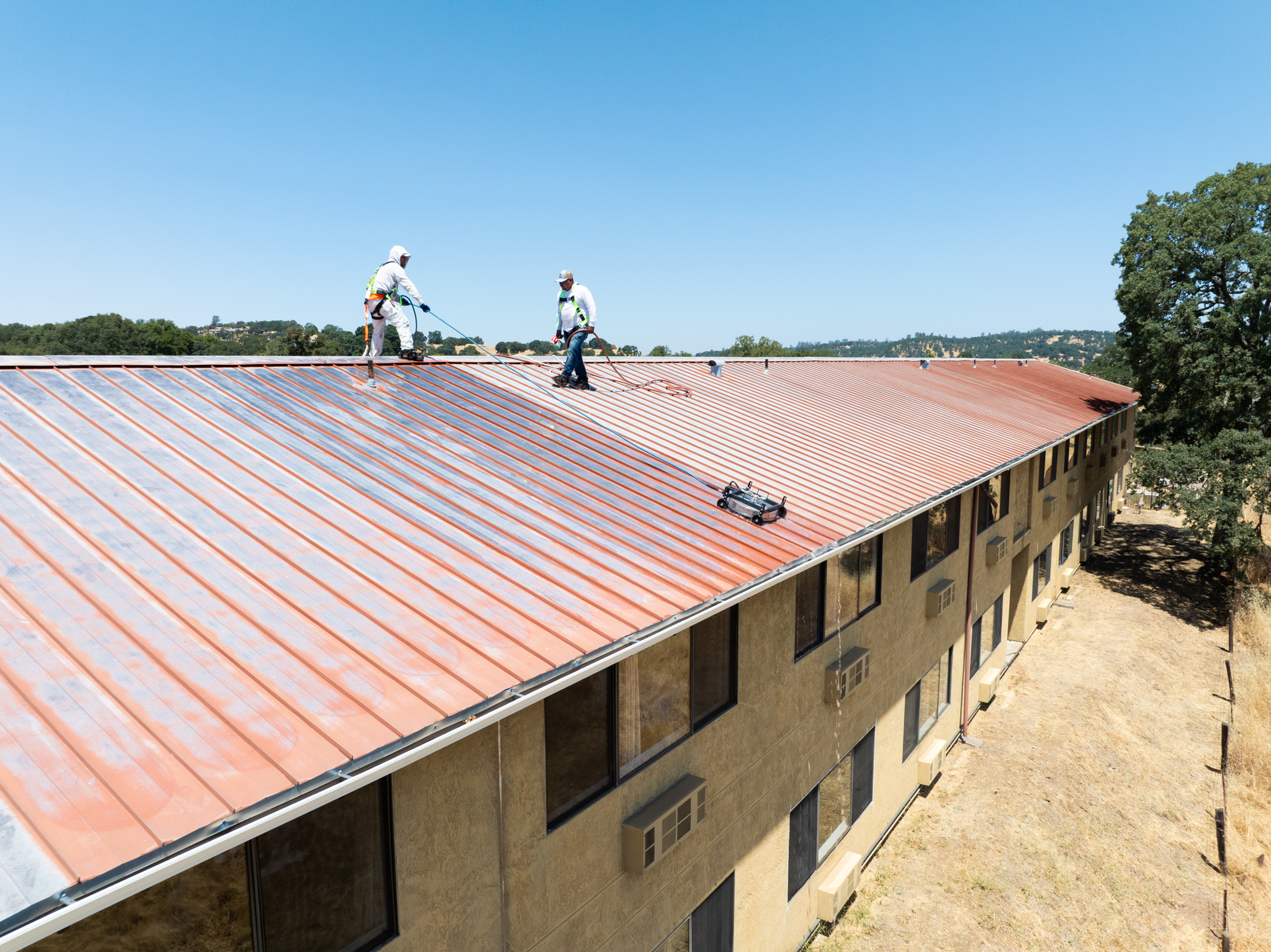
When property owners evaluate the health of a commercial asset, they often focus on roofing systems, HVAC equipment, paving, and structural components.
What is frequently overlooked is the role protective coatings play in preserving the building itself.
Commercial painting is often viewed as a cosmetic improvement. In reality, quality coating systems function as one of the first lines of defense against environmental exposure, material deterioration, and premature capital expenditures.
For facility managers throughout Sacramento and Northern California, painting should be viewed as an asset preservation strategy rather than a visual upgrade.
The Building Envelope Is Constantly Under Attack
Every commercial property experiences continual exposure to environmental stressors.
Exterior surfaces face:
- UV radiation
- Temperature fluctuations
- Wind-driven debris
- Moisture intrusion
- Airborne contaminants
Over time, these conditions begin breaking down coating systems. Once the protective layer deteriorates, the underlying substrate becomes vulnerable.
Depending on the surface type, that can result in:
- Rust on structural steel
- Wood degradation
- Concrete staining
- Stucco cracking
- Premature weathering
A properly maintained coating system helps shield these materials before more significant damage develops.
The Cost Difference Between Maintenance and Restoration
One of the most common mistakes property owners make is waiting until deterioration becomes highly visible.
By the time coatings are severely chalking, peeling, or failing, the project scope often changes dramatically.
Instead of a maintenance repaint, owners may be faced with:
- Extensive pressure washing
- Rust remediation
- Surface repairs
- Moisture mitigation
- Material replacement
These conditions increase labor requirements, material costs, and project timelines.
Routine repainting typically costs far less than large-scale restoration work created by years of deferred maintenance.
Asset Preservation Impacts Property Value
Commercial real estate value is influenced by more than square footage and location.
The condition of the asset itself plays a significant role in:
- Investor confidence
- Building inspections
- Leasing activity
- Tenant retention
- Acquisition evaluations
A property that demonstrates proactive maintenance often communicates lower future risk.
Potential tenants and buyers recognize when ownership consistently invests in upkeep rather than reacting to problems after they occur.
High-Risk Areas That Deserve Priority
Not all surfaces age at the same rate.
Certain building components typically require more frequent evaluation, including:
Exterior Steel
Railings, structural supports, gates, and equipment enclosures are vulnerable to oxidation when coating systems begin to fail.
High-Sun Exposure Walls
South and west-facing elevations frequently experience accelerated fading and coating degradation.
Building Entrances
These areas receive constant traffic and often create the first impression visitors encounter.
Loading and Service Areas
Industrial facilities often experience mechanical wear that can shorten coating life expectancy.
Targeted maintenance in these zones can significantly extend the service life of the overall property.
Painting as Part of a Lifecycle Strategy
The most successful facility management programs do not wait for obvious failure.
Instead, they incorporate painting into a long-term lifecycle strategy.
Benefits include:
- Predictable maintenance budgets
- Reduced emergency repairs
- Longer substrate life
- Improved operational appearance
- Better return on capital investments
When viewed through this lens, commercial painting becomes a strategic investment rather than a discretionary expense.
The Bottom Line
Buildings depreciate naturally. Protective coatings help slow that process.
Commercial painting is about more than appearance. It protects critical building materials, supports long-term value, and reduces the likelihood of major repair costs in the future.
✅ The objective isn’t simply keeping a property looking good. The objective is preserving the asset that generates value.